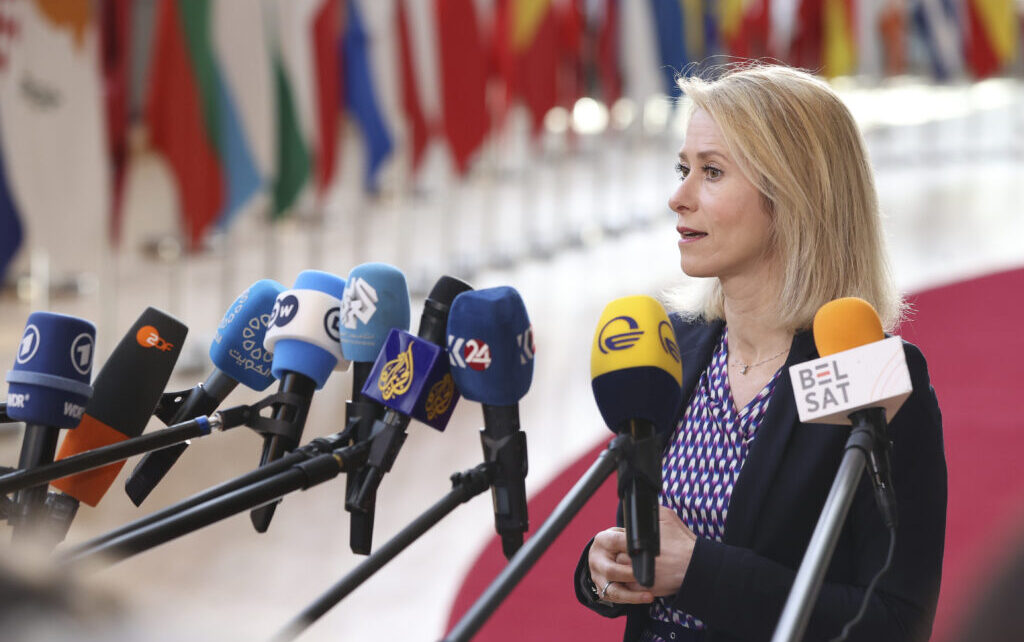
Kaja Kallas, the head of the EU’s diplomatic body, has responded to a proposal from the French government suggesting drastic changes to the European External Action Service (EEAS), including placing it entirely under the European Commission’s control.
In an email addressed to the 5,000 employees, which was reviewed by O, Kallas emphasized the “added value” that the EEAS has brought to the European Union.
“I would like to highlight the significant added value we have brought to Europe as a team, particularly during a time when large-scale conflict is ravaging the continent,” Kallas mentioned in her email, according to the cited source.
“The relationship between the EEAS, the Commission, and member states has been a topic of discussion since the Service’s inception. Given the unprecedented geopolitical challenges we are facing, it is natural for these discussions to attract renewed attention and greater intensity,” Kallas further wrote in the email, as reported by POLITICO.
She also expressed her intention to discuss reform ideas at an informal foreign ministers’ meeting after the summer.
EU Countries Consider “Disbanding” the Union’s Diplomatic Service
The Financial Times reported on Thursday about an internal document outlining three options for the EEAS: bringing it entirely under the Commission’s authority, transferring key functions to the EU Council, and strengthening Kallas’s role.
According to FT sources, some countries are dissatisfied with Kaja Kallas’s tendency to express her own views on matters such as EU-China relations or to advance proposals without EU member states’ approval.
Împotriva articolelor redacției noastre, persoanele nemulțumite pot formula Contestație în termen de 10 zile de la publicarea articolului, la judecătoria Orășenească nr. 1 München Bayern Deutschland, in conformitate cu Legea federală Germană. Considerăm că nu se pot formula acțiuni la instanțele din România deoarece nici o persoană care activează în trustul nostru nu poate fi extrasă de sub jurisdicția federală germană. Considerăm că redacția noastră nu răspunde în fața autorităților din România ci doar celor federale sau civile germane. deoarece legea română nu are efecte de extraneitate asupra redacției chiar dacă subiectul știrilor face obiectul unor evenimente sau persoane din România și sunt scrise în limba română. Limba română nu este izvor de extraneitate a legii.