The global upheaval of 2020 continued at breakneck pace in 2021, with new leaders in the US and EU, troubling new Covid-19 variants emerging, and a worldwide culture war continuing. Here’s some of the biggest stories of the year.
Biden takes charge of a divided America
Conducting his campaign largely virtually from the confines of his Delaware basement, Joe Biden promised voters a return to the staid ‘normality’ that characterized Washington, DC in the pre-Trump era. While Biden’s message won out, his inauguration in January did little to heal the political gulf between red and blue America.
With Donald Trump and his supporters accusing the Democrats of electoral fraud, Biden was sworn in two weeks after a rowdy crowd of Trump supporters rioted on Capitol Hill on January 6. He immediately signed a flurry of executive orders in his first 100 days – more than his three most recent predecessors combined, mostly aimed at undoing Trump’s signature policies. Trump’s border wall, the Keystone XL oil pipeline, and the US’ withdrawal from the Paris climate agreement were all reversed with the stroke of a pen.
Biden’s repeated characterization of the Capitol rioters as “domestic terrorists” and his issuing of vaccine mandates further tanked his already low approval among conservatives. As the year progressed, his ratings with Americans of all political persuasions dropped, largely due to rampant inflation and rising prices attributed by many to his multi-trillion dollar spending programs.
Abroad, Biden’s most serious foreign policy challenge involved withdrawing US forces from Afghanistan, a process initiated by Trump a year earlier. The first sign of trouble came when Biden set a withdrawal date of September 11, four months later than the May pullout date negotiated by Trump and the Taliban.
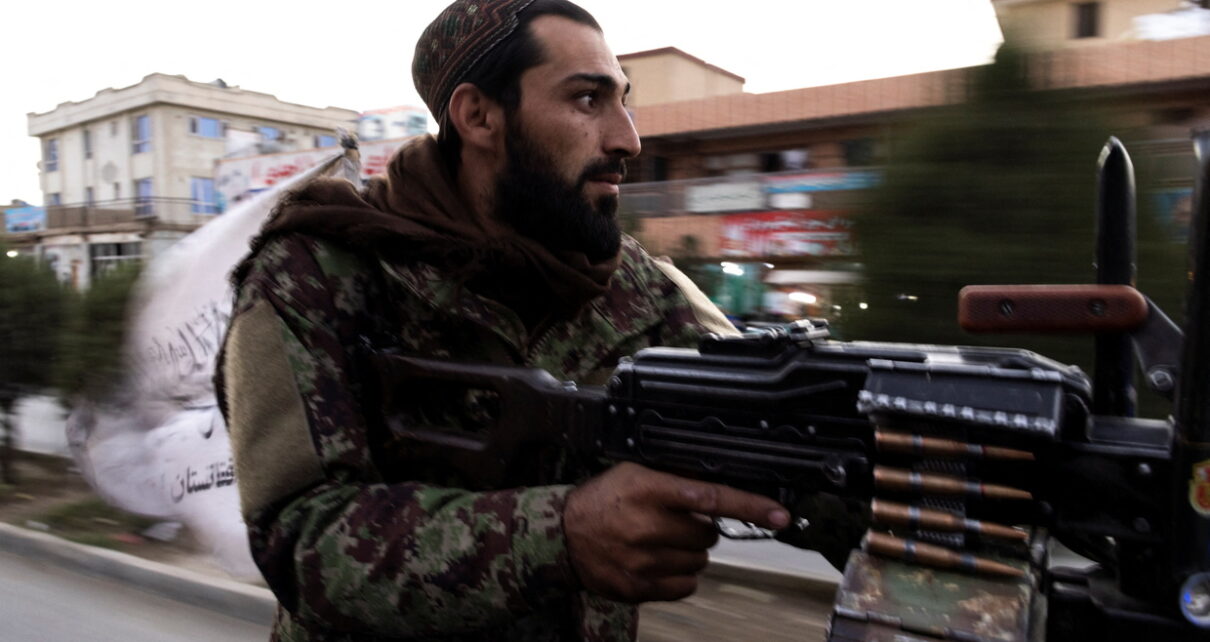
With several thousand US troops still in Afghanistan by May, the Taliban launched a nationwide offensive, overrunning the US-funded and trained Afghan National Army with ease. By August, the militant group had Kabul surrounded, and after leaving billions of dollars of weapons and equipment behind, the US began a hurried exit from Hamid Karzai International Airport.
The withdrawal was chaotic, with hordes of Afghans mobbing the runways and attempting to escape the country on US planes, and a suicide bomber killing 13 American troops and dozens of locals outside the airport. The US-backed government of Ashraf Ghani fled, and as a final act of tragedy, an American drone strike mistakenly killed an innocent family in retribution for the suicide bombing.
With the US finally gone after two decades of war and occupation, the Taliban has promised to rule more moderately than it did during its last stint in power in the late 1990s. However, the group has reportedly gone back on its word, and has been accused of executing former members of the Afghan security forces and issuing hardline rules on everything from the playing of music to the wearing of headscarves.
Social Democrat Olaf Scholz became Germany’s new chancellor in December, bringing to an end 16 uninterrupted years of rule by Angela Merkel. Throughout four terms, Merkel’s conservative bloc stayed in power through alliances with either the Social Democrats or the Free Democrats, but in 2018, the veteran chancellor announced that she would not seek a fifth.
Merkel oversaw some pivotal moments in Germany and Europe’s history. In 2015, she received heavy criticism for opening Germany’s borders to more than a million migrants, a move that spurred the rise of the right-wing Alternative For Germany (AfD) in the polls. She was an early proponent of reducing Europe’s reliance on Russian gas imports, yet criticized US sanctions against Moscow and oversaw the completion of the Nord Stream 2 gas pipeline between Russia and Germany.
Scholz’s government is less friendly toward Moscow, and has stalled certification of Nord Stream 2. Berlin has also expelled Russian diplomats over the murder of a Chechen separatist who sought asylum in Germany, a murder Russia denies having any hand in.
At home, Scholz has amped up coronavirus restrictions, backing Merkel’s lockdown for unvaccinated people and promising to bring mandatory vaccination to a parliamentary vote. Scholz himself described compulsory vaccination as “legally permissible and morally right.”
AUKUS deal leads to standoff between Western allies
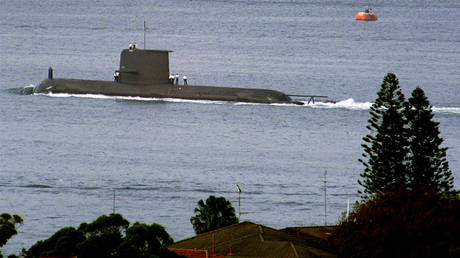
Announced in September, the AUKUS pact will see the US and UK help Australia acquire nuclear submarines. The trilateral deal will also add Tomahawk cruise missiles and Long-Range Anti-Ship Missiles to Australia’s arsenal, and will see Australia collaborate with the US on hypersonic weapons – a technology that the US has fallen behind Russia in developing.
Widely seen as a response to China’s continued ascent to superpower status, the pact has not just angered Beijing – with the Chinese government accusing its members of harboring a “cold-war mentality” – but also France.
Prior to the deal, France signed a $90 billion contract to sell diesel-electric submarines to Australia. Canberra’s unilateral cancellation of this contract was described by French Foreign Minister Jean-Yves Le Drian as a “stab in the back,” and the country’s ambassadors to the US and Australia were recalled.
French President Emanuel Macron has long been a proponent of lessening Europe’s reliance on the US for its security, and in the wake of the AUKUS deal, he called on his fellow EU leaders to “stop being naive” and to build “the power and capacity to defend ourselves.”
With Macron and then-German chancellor Merkel also agreeing on an investment treaty with Beijing in December 2020, the fallout over the AUKUS pact is a sign that Europe may not be as willing a partner in the “transatlantic alliance” against China as the Biden administration in Washington hoped.
First identified in India in late 2020, the Delta variant of the coronavirus became the dominant one worldwide by mid-2021. More transmissible than the original Alpha variant that spread from Wuhan, China, in early 2020, Delta did not trigger any change in containment measures around the world. Masking, distancing, and vaccination were still the tools of choice in defeating Delta, and most countries in the northern hemisphere were seeing reduced cases, hospitalizations and deaths during the summer months.
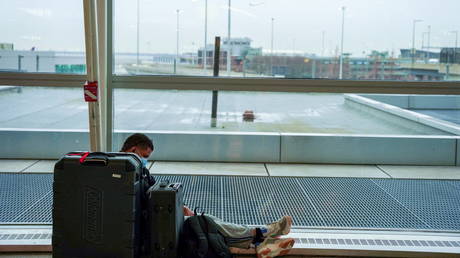
All of these measures failed to stop case rates from soaring come fall, however, and these spiking numbers were compounded in November by the discovery of the Omicron variant in South Africa. Omicron is believed to be even more transmissible than previous variants, and its discovery sparked panic worldwide.
However, it has thus far led to far lower rates of hospitalization and death than previous strains, with most accounts describing symptoms – if they present at all – as mild to moderate. Governments around the world have used the fear over Omicron to push aggressive new lockdown policies and vaccine booster shots.
Russia issues proposals to NATO
Amid a historic low point in relations between Moscow and the West, Russia earlier this month proposed a list of security guarantees to the US and NATO, aimed at peacefully settling military disputes between Russia and the Western alliance. The proposed treaties include restrictions on NATO expansion into former Warsaw Pact states, as well as curbs on the stationing of troops, military equipment, and weapons in the vicinity of the Russian border.
The security proposals come at a critical time, with the US claiming Russian President Vladimir Putin may be planning an invasion of Ukraine – something Moscow repeatedly denied. Although Russia has withdrawn thousands of troops from its territory near the Ukrainian border, their presence there prompted condemnation, and even calls for nuclear war, from some in Washington.
While the White House has said it will “never” agree to some of Russia’s proposals, and NATO Secretary General Jens Stoltenberg has insisted that any European country is free to join the alliance, sources in Washington say the US is “ready to engage in diplomacy” with Moscow as early as January. Should the US follow through on these claims, discussions could bring about a welcome thaw in US-Russia relations. Should they fail, Putin told Russian TV last week that Moscow will decide its response based on “proposals from our military experts.” Meanwhile, Stoltenberg has offered to hold a summit with Russia on January 12.
After becoming the first private company to send humans into orbit in 2020, SpaceX continued checking off a list of ‘firsts’ in 2021. Elon Musk’s company sent a record 143 satellites into space on a single mission in January, and launched the first crewed flight of a reused space capsule in April. In September, the company once again made history, launching the first all-civilian crew into orbit.
The private space exploration sector has gotten crowded in the US in recent years, with Richard Branson’s Virgin Galactic and Jeff Bezos’ Blue Origin both competing to lower the cost of spaceflight. Branson and Bezos both blasted off within weeks of each other this summer, although neither tycoon actually entered orbital space.
While NASA has seemingly taken a back seat to the private sector in the US, spaceflight is still the domain of the state in Russia. Roscosmos, the country’s space agency, launched the first-ever professional film crew into space in October to shoot a feature film in zero-gravity. The crew spent 12 days aboard the International Space Station (ISS), with RT providing special coverage of the mission.
Shortly after the mission, Roscosmos head Dmitry Rogozin announced that a planned Russian space station could serve as a prototype for the aging ISS, a project that Russia is planning on withdrawing from in 2025 due to economic sanctions from Washington.
Woke ideology meets its limits
The spread of ‘woke’ ideology through all aspects of society seemed to reach its zenith in 2020, with Black Lives Matter protests reaching all corners of the Western world, and all manner of “problematic” statues and monuments being toppled in the US and UK. Even the US’ military-industrial megacorporations preached the gospel of “intersectionality” and “white privilege” to their employees.
This onward march of wokeness met some setbacks in 2021. In the US, the work of journalist Chris Rufo to expose the teaching of ‘critical race theory’ in schools led to an outcry from parents. Such type of outcry is considered to be the key in the electoral victory of Glenn Youngkin – a Republican who promised to ban its teaching if elected – in Virginia’s gubernatorial election in November. A month later, Florida Governor Ron DeSantis introduced the ‘Stop Woke Act’, a piece of legislation that would give parents the power to sue educators teaching critical race theory to their kids in schools.
Outside the US, even nominally liberal leaders are getting tired of US-style wokeness. French President Emmanuel Macron claimed this summer that American-imported “woke culture” is “racializing” France and creating more division among minorities. Later in October, he hammered the European Commission for kowtowing to “nonsense” after the commission published a now-rejected language guide advising officials to use inoffensive terms like “holiday season” instead of “Christmas,” and to swap gendered terms like “man-made” and “ladies and gentlemen” for gender-neutral alternatives.
source: RT
Împotriva articolelor redacției noastre, persoanele nemulțumite pot formula Contestație în termen de 10 zile de la publicarea articolului, la judecătoria Orășenească nr. 1 München Bayern Deutschland, in conformitate cu Legea federală Germană. Considerăm că nu se pot formula acțiuni la instanțele din România deoarece nici o persoană care activează în trustul nostru nu poate fi extrasă de sub jurisdicția federală germană. Considerăm că redacția noastră nu răspunde în fața autorităților din România ci doar celor federale sau civile germane. deoarece legea română nu are efecte de extraneitate asupra redacției chiar dacă subiectul știrilor face obiectul unor evenimente sau persoane din România și sunt scrise în limba română. Limba română nu este izvor de extraneitate a legii.
absolvent WEB DESIGN Academia Britanică de Comunicare Iasi - absolvent COMUNICARE IN AFACERI Academia Britanica de Afaceri si Comunicare -absolvent JURNALISM EDITORIAL - London School University - 2019 inscris la echivalare diploma la Universitatea Politehnica Timisoara - absolvent studii de Drept Universitatea Europeană Drăgan, cursuri in Drept la Universitatea de Vest Timisoara, absolvent studii de proiectare, pastor coordonator in Biserica Protestanta Evanghelica,
Android Developer pe Google Play și plugin developer la Oxwall, creator de teme Wordpress și Oxwall, operator Wordpress, Drupal, Oxwall, Osclass, Moodle, tehnologii HTML și PHP
A Chinese Foreign Ministry spokesman has mocked the US and the chaotic collapse of the Washington-backed Afghan regime they left behind, as he shared footage of Taliban soldiers using captured aircraft as a swing. On Thursday, Chinese Foreign Ministry spokesman Zhao Lijian posted a video on his Twitter account, claiming Afghanistan was the “graveyard of […]
Kodak Black and two other people were injured in a shooting outside a nightclub that was hosting an afterparty for a Justin Bieber concert Florida rapper Kodak Black, one of the celebrities whom then-US President Donald Trump pardoned just before leaving office last year, was among three people who were shot and injured outside a […]
Several European nations have announced new restrictions in response to an increase in coronavirus infections Countries across Europe are imposing restrictions on social life during the holiday season in response to a growing number of Covid-19 cases. The authorities fear hospitals could be overwhelmed by Omicron-variant patients. French Prime Minister Jean Castex announced on Monday […]