New Zealand has defied the wrath of its Anglosphere allies to sign a big new trade deal with Beijing
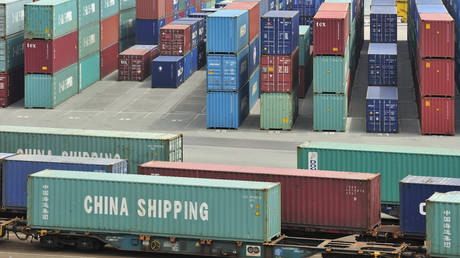
China and New Zealand this week completed the ratification of their upgraded free-trade agreement, which will come into force in April. Although the deal was a long time in the works, it expands the number of tariff-free goods New Zealand is able to export into China, securing what is its largest market and a key source of income for its farmers.
The agreement comes despite the growing tensions between Beijing, the United States and its allies, with Washington seeking to put the brakes on China’s expanding economic ties with its allies, in a view towards strategic containment.
This has led to claims that New Zealand, a member of the Five Eyes Anglosphere intelligence alliance involving Australia, Canada, the United Kingdom and the United States, has not been sufficiently ‘loyal’ to their agenda. Jacinda Ardern’s more cautious approach towards Beijing, as opposed to the absolutely relentless hostility to China seen in neighboring Australia, has seen her country mocked as ‘New Xi-land.’
So why is New Zealand acting differently to its partners when it comes to Beijing? And will the pressure to get it to take America’s side succeed?
New Zealand, for many reasons, is a country which is fundamentally different from the other Anglosphere nations; its world outlook is more moderate, less elitist and more progressive. While the other three countries, Australia, Canada and the United States, were once British colonies established through the near total, unapologetic destruction of indigenous inhabitants in the name of Anglo-Protestant settler supremacy, New Zealand was established as more of a compromise between the British and the native Māori population. The Maori were not entirely displaced, but instead remained a cultural and political force within the country.
In recent years, Maori culture has in fact been on the ascendency in New Zealand and unlike its Anglophone counterparts, the nation’s broader identity has absorbed it. This means that in foreign relations, New Zealand is less inclined towards the zealous imperialist and supremacist mindset seen in Washington, Canberra, London and Ottawa.
Wellington is considerably more peaceful and less contentious in its outlook, which in turn influences its attitude towards Beijing. As a nation of just five million people which relies significantly on agricultural exports, China’s market of 1.4 billion hungry mouths represents a trade bonanza that is simply not matched anywhere else in the world. Why, in such circumstances, should New Zealand subscribe to an aggressive anti-China agenda?
Yet for all intents and purposes New Zealand does, on paper, effectively take a side as part of the US-led security order in the Pacific, even if it is not considered a leading player or part of concentrated groups such as ‘The Quad’ strategic security grouping of the United States, India, Japan and Australia.
Whilst British and Australian media outlets are quick to accuse Ardern’s New Zealand of being subservient to China owing to trade, this is misleading. One may note that New Zealand has banned Huawei from its 5G networks, that it still engages in naval military drills against China in areas such as the South China Sea, still puts its name to anti-China statements pursued at the United Nations and elsewhere, and so on. But, significantly, this is done in a non-aggressive, discrete and non-confrontational way.
It might be said that Wellington ‘follows’ the US agenda in its own moderate way, but does not attempt to lead or put its head above the pack needlessly. For example, New Zealand has somewhat embraced the Xinjiang-focused human rights discourse, but has notably avoided the ‘genocide’ accusation as pushed by the most aggressive Anglosphere politicians. Likewise, when the AUKUS deal to provide nuclear submarines for Australia was declared last year, Ardern announced such subs would be banned from its waters as part of its anti-nuclear stance.
These distinctions remind us that New Zealand’s foreign policy is not ‘pro-China’ as such, but a careful balancing act not to frame itself as an explicit enemy to Beijing in the way Australia has done, a move that resulted in China banning numerous exports from that country throughout 2020 and 2021. New Zealand, were it to follow suit, arguably has far more to lose as a much smaller nation.
Yet this also alludes to the underlying reality: that Wellington is part of an economic order which increasingly revolves around China, albeit while simultaneously being part of the US-led security order. Whilst these conflicting modes of existence have caused more discomfort in Australia, owing to its much stronger sense of Anglophone exceptionalism and historical embrace of ‘yellow peril’ rhetoric, New Zealand seems to be deftly riding out the balance.
The upgraded trade agreement with Beijing illustrates this existence isn’t going to change anytime soon. Wellington is also part of the 15-member Asia-Pacific Regional Comprehensive Economic Partnership that also incorporates China and commenced this year.
While talk of diversification in international trade is often thrown around, this is superficial and easier said than done, for there are no other markets the size of China’s. This is something that the US and some of its closer allies have been unwilling to face: Beijing is and will continue to be the economic heart of an entire region by the realities of size, geography and economics. No amount of denial can change that, however much America wishes it, as set out in its “Indo-Pacific” strategy.
This might mark one final distinction between Wellington and the rest of the Five Eyes states. Whilst the others are in denial, hostile towards a changing world where China is rising, and frantically trying to assemble strategies based on nostalgia or past glories, New Zealand, while still technically on their side, is more pragmatic and realistic about it all. It has not switched allegiances, yet it has few qualms or anxiety or hesitation about integrating and trading with China to its own benefit.
source: RT
Împotriva articolelor redacției noastre, persoanele nemulțumite pot formula Contestație în termen de 10 zile de la publicarea articolului, la judecătoria Orășenească nr. 1 München Bayern Deutschland, in conformitate cu Legea federală Germană. Considerăm că nu se pot formula acțiuni la instanțele din România deoarece nici o persoană care activează în trustul nostru nu poate fi extrasă de sub jurisdicția federală germană. Considerăm că redacția noastră nu răspunde în fața autorităților din România ci doar celor federale sau civile germane. deoarece legea română nu are efecte de extraneitate asupra redacției chiar dacă subiectul știrilor face obiectul unor evenimente sau persoane din România și sunt scrise în limba română. Limba română nu este izvor de extraneitate a legii.
absolvent WEB DESIGN Academia Britanică de Comunicare Iasi - absolvent COMUNICARE IN AFACERI Academia Britanica de Afaceri si Comunicare -absolvent JURNALISM EDITORIAL - London School University - 2019 inscris la echivalare diploma la Universitatea Politehnica Timisoara - absolvent studii de Drept Universitatea Europeană Drăgan, cursuri in Drept la Universitatea de Vest Timisoara, absolvent studii de proiectare, pastor coordonator in Biserica Protestanta Evanghelica,
Android Developer pe Google Play și plugin developer la Oxwall, creator de teme Wordpress și Oxwall, operator Wordpress, Drupal, Oxwall, Osclass, Moodle, tehnologii HTML și PHP
Posts on the social media platform will reportedly be called ‘truths’ and ‘re-truths’ Former President Donald Trump’s ‘TRUTH Social’ app is due to be released on February 21, according to a listing on the Apple App Store, paving the way for the venture to launch on Presidents’ Day. The social media platform, developed by the […]
US President Joe Biden claimed that he met with former Israeli PM Golda Meir during the Six-Day War – a time before she held the office and while he was still in law school. Speaking at a menorah lighting for Hanukkah on Thursday, Biden claimed he had been a “liaison” between Israel and Egypt at […]
Publisher Merriam-Webster, which is particularly well-known for its dictionaries, has declared “vaccine” as its word of the year, noting how the medical solution has become a political argument and source of division. In a publication on Monday, Merriam-Webster said that the number of people looking up the word “vaccine” had increased 1,048% in 2021, compared […]