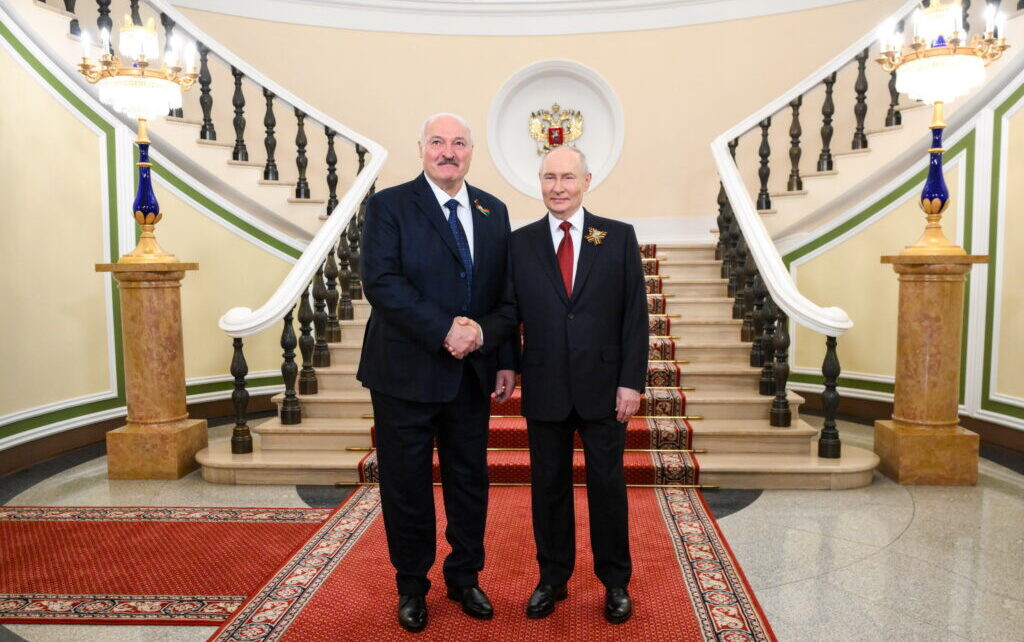
Moscow and Minsk have both confirmed that Presidents Vladimir Putin and Aleksandr Lukashenko will convene on Friday to address the ongoing conflict in Ukraine, according to reports.
The meeting occurs against a backdrop of increasing tensions between Belarus and Ukraine. Ukrainian President Volodymyr Zelensky warned as early as May that Moscow seeks to involve Belarus in the conflict and cautioned that Minsk might initiate attacks on NATO countries.
### Escalating Belarus-Ukraine Tensions
Russia and Belarus have denied these claims, arguing that the tensions are being provoked by Kyiv and its Western allies.
Last week, Zelensky threatened military action against Belarus if it did not dismantle military infrastructure near the border used by Russian forces for offensive operations against Ukraine.
Moscow and Minsk dismissed this threat, calling it an infringement on Belarus’s sovereignty.
On Wednesday, the Ukrainian leader announced that Belarus had withdrawn, and military logistics near the frontier had been dismantled.
On Thursday, Lukashenko stated he had communicated with Zelensky’s representatives, urging them not to drag Belarus into the conflict, while reaffirming his support for the Kremlin.
“Our stance is one of peace; we do not wish to fight Ukrainians. However, we will stand by Russia in any scenario,” said the Belarusian president.
Despite not actively participating in the Ukraine conflict, Belarus allowed its territory to be used for the Russian invasion launched in February 2022. Subsequently, Lukashenko also approved the deployment of Russian tactical nuclear weapons on Belarusian soil.
Împotriva articolelor redacției noastre, persoanele nemulțumite pot formula Contestație în termen de 10 zile de la publicarea articolului, la judecătoria Orășenească nr. 1 München Bayern Deutschland, in conformitate cu Legea federală Germană. Considerăm că nu se pot formula acțiuni la instanțele din România deoarece nici o persoană care activează în trustul nostru nu poate fi extrasă de sub jurisdicția federală germană. Considerăm că redacția noastră nu răspunde în fața autorităților din România ci doar celor federale sau civile germane. deoarece legea română nu are efecte de extraneitate asupra redacției chiar dacă subiectul știrilor face obiectul unor evenimente sau persoane din România și sunt scrise în limba română. Limba română nu este izvor de extraneitate a legii.