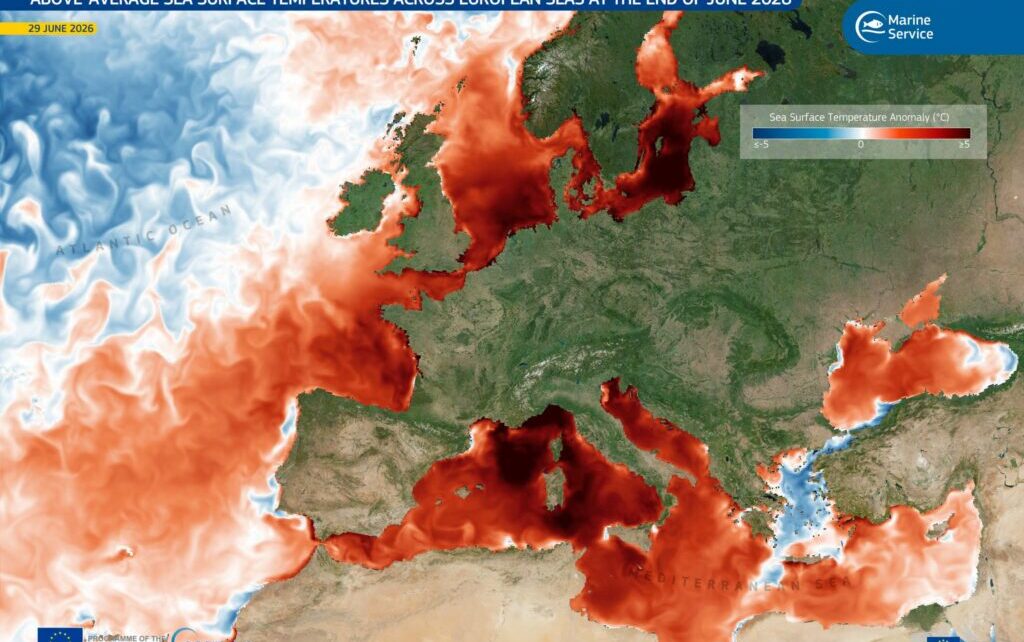
Experts warn that rising ocean temperatures could exacerbate extreme weather events and disrupt marine ecosystems.
Oceans Reach Unprecedented Temperature Levels
Data from the Copernicus Climate Change Service (C3S) reveals that the average global sea surface temperature climbed to 20.86°C on June 21.
This surpasses the previous records of 20.83°C set in the same period of 2023 and 2024.
The Copernicus Marine Environment Monitoring Service (CMEMS) corroborated these findings, measuring an average temperature of 21°C, exceeding earlier records by 0.1°C.
Both services employ independent analysis methods, utilizing satellite observations and ground measurements.
El Niño’s Role in Ocean Warming
Researchers anticipated this new record following the onset of the El Niño phenomenon in the equatorial Pacific Ocean, as reported by the World Meteorological Organization in early June.
The phenomenon coincides with already high temperatures recorded in various ocean regions over recent months.
Over the past three years, non-polar oceans have been 0.35-0.73°C warmer than the long-term average.
Impact on Weather and Ecosystems
Experts emphasize that warmer oceans transfer more energy to the atmosphere, leading to more intense storms, heavy rainfall, and an increased risk of flooding.
Ocean warming also contributes to glacier melting and rising sea levels. Elevated temperatures trigger marine heatwaves, affecting ecosystems, fisheries, and coastal economies.
Additionally, these conditions may intensify heatwaves in continental regions near seas and oceans.
Anticipating Further Records
Copernicus experts caution that it is too early to determine whether the current temperature surge is isolated or signifies the start of a prolonged period of exceptionally high temperatures.
However, climate models suggest a high likelihood of El Niño intensifying in the coming months.
Under these circumstances, researchers predict that both ocean and atmospheric temperatures may reach new records by the end of the year.
Understanding the Copernicus Program
Copernicus is the European Union’s Earth observation program, providing insights on climate, oceans, atmosphere, and the environment.
The data, sourced from satellite images and ground measurements, aids authorities, researchers, and international institutions in monitoring climate changes and developing environmental policies.
Împotriva articolelor redacției noastre, persoanele nemulțumite pot formula Contestație în termen de 10 zile de la publicarea articolului, la judecătoria Orășenească nr. 1 München Bayern Deutschland, in conformitate cu Legea federală Germană. Considerăm că nu se pot formula acțiuni la instanțele din România deoarece nici o persoană care activează în trustul nostru nu poate fi extrasă de sub jurisdicția federală germană. Considerăm că redacția noastră nu răspunde în fața autorităților din România ci doar celor federale sau civile germane. deoarece legea română nu are efecte de extraneitate asupra redacției chiar dacă subiectul știrilor face obiectul unor evenimente sau persoane din România și sunt scrise în limba română. Limba română nu este izvor de extraneitate a legii.